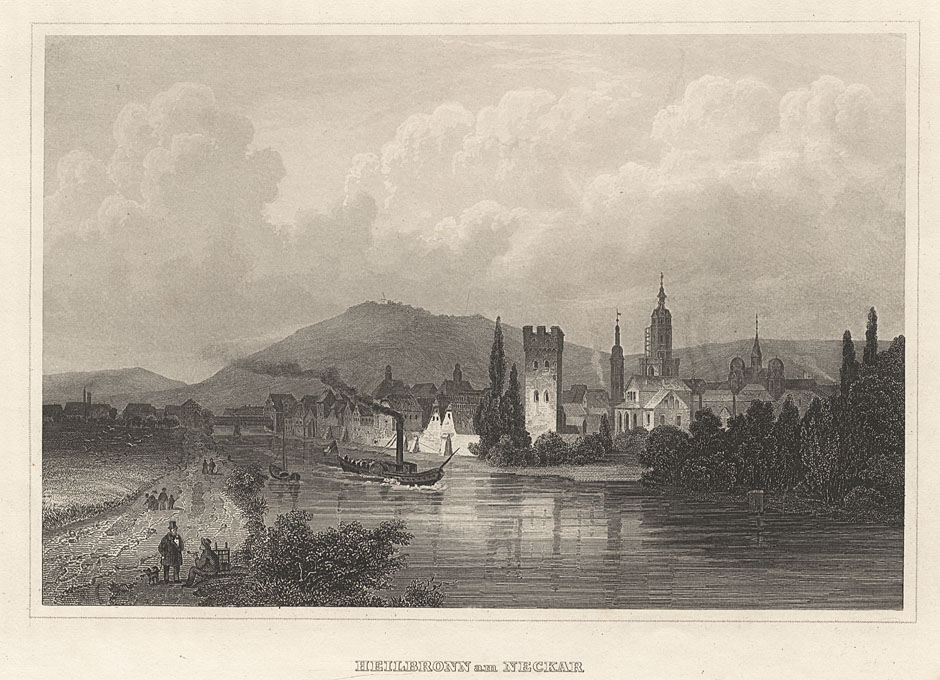
Heilbronn am Neckar. - Stahlstich (BI), um 1850
Heilbronn am Neckar.
Stahlstich, um 1850.
Aus der Kunstanstalt des Bibliographischen Instituts in Hildburghausen.
Darstellung : 10,5 × 16 cm
Blattmaß : 15 × 23,5 cm
Der gute Abzug etwas schief auf das vollrandige Blatt gedruckt, linke und untere Blattkante leicht gebräunt.
Wenige stecknadelkopfkleine Stockfleckchen in den unbedruckten Blatträndern (siehe Abb.).
Rückseitig zwei Streifen vormaliger Montage am oberen Blattrand.
20 EUR
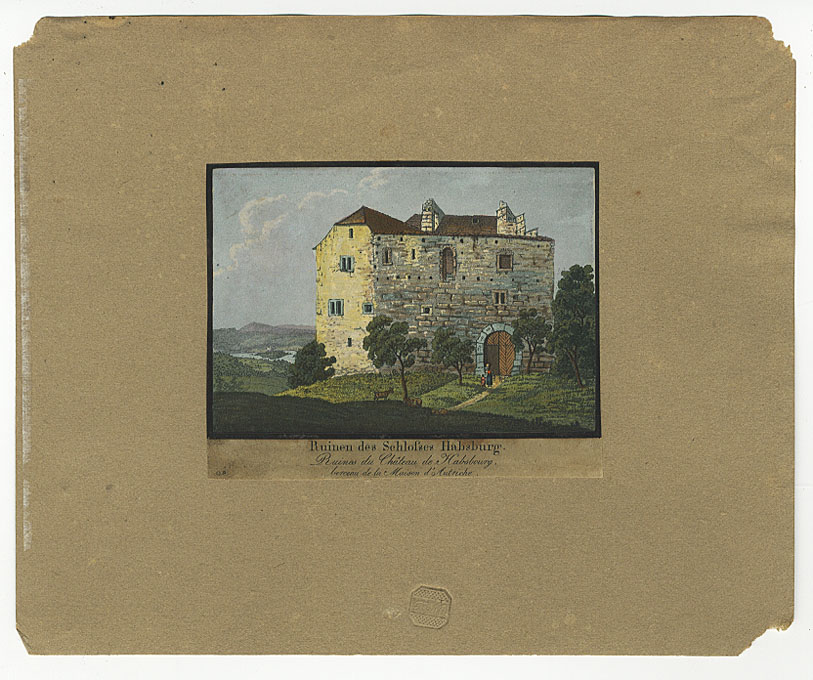
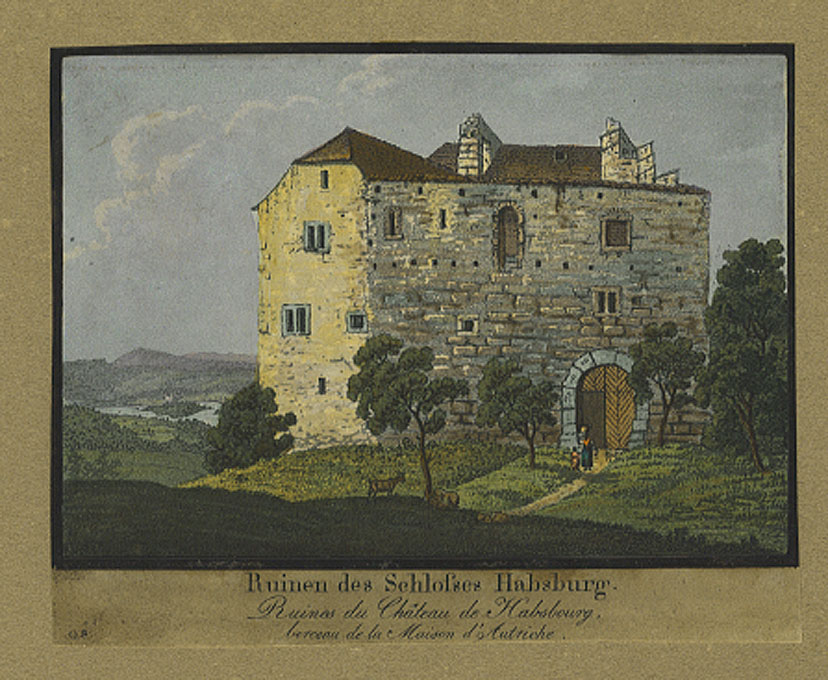
Aargau (Schweiz) : Ruinen des Schlosses Habsburg (Stammburg der Habsburger). - Altkol. Aquatinta, ca. 1835
Die Burg Habsburg von Osten.
„Ruinen des Schlosses Habsburg. Ruines du Château de Habsbourg, berceau de la Maison d’Autriche“
Altkolorierte Aquatinta-Radierung,
mit der Nr. „Q. 8.“, ca. 1835.
Zürich, Hermann Trachsler (Hg.).
Darstellung : 7 × 10 cm
Blatt : 8 × 10 cm
Die kleine Aquatinta auf ein größeres graubraunes Unterlageblatt mit Blindstempel montiert. Dieses mit kleinen Abrissen an allen vier Ecken. Der Schriftzug unterhalb der Aquatinta gebräunt und fingerfleckig – die Aquatinta selbst in schöner, farbfrischer Erhaltung.
Zur Abbildung: Das Blau des Himmelst ist in der Aquatinta deutlich heller und transparenter, als auf dem Scan dargestellt werden kann.
45 EUR
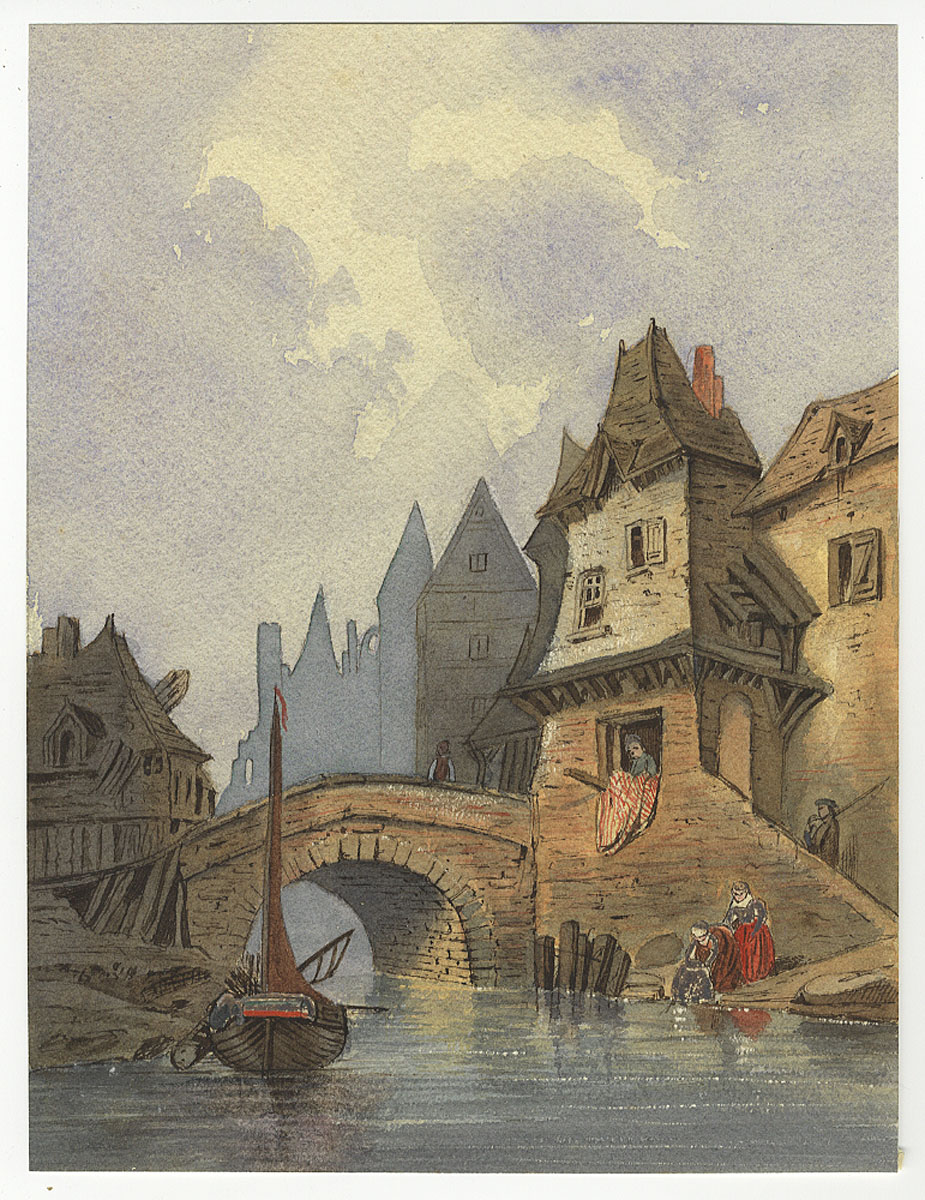
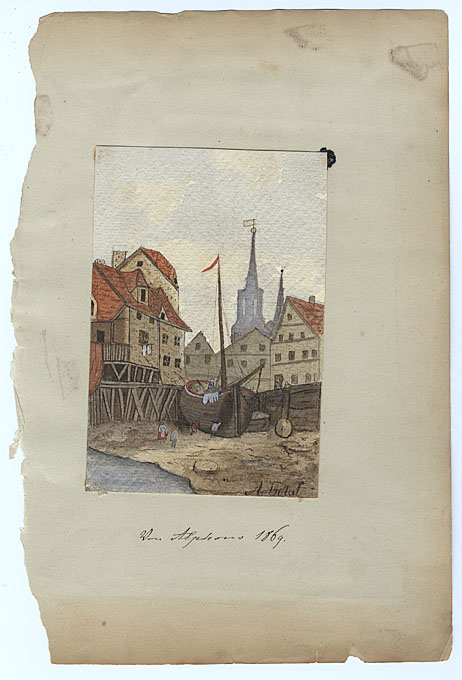
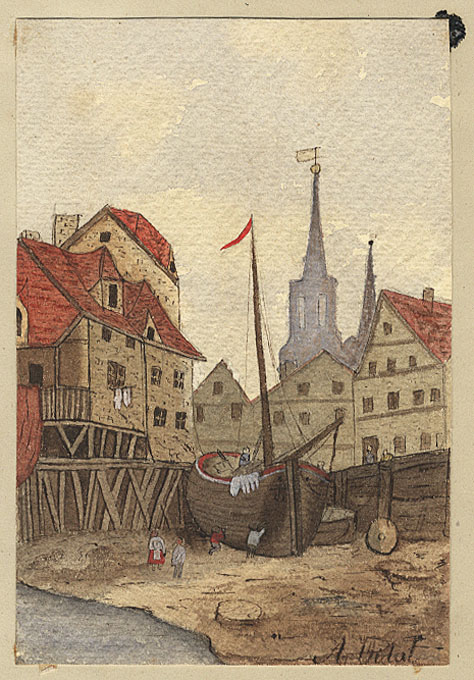
Alphons Vidal : Ansichten eines Hafenstädtchens - 2 Aquarelle, 1869
Alphons Vidal :
Ansichten eines Hafenstädtchens
2 Aquarelle,
eines signiert und unterhalb des Blattes von alter Hand datiert, 1869.
Blattmaß (größeres Bild) : 24 × 18,5 cm
Blattmaß (kleines Bild) : 16 × 11 cm
Das kleinere Aquarell an den vier Ecken auf ein deutlich größeres Unterlageblatt montiert. Dieses stark gebräunt, altfleckig und mit unregelmäßigem Kantenabschluß.
Das Aquarell selbst etwas nachgedunkelt sowie in der Himmelspartie gering fingerfleckig – ansonsten in guter Erhaltung.
Das größere Aquarell in sehr schöner farbfrischer Erhaltung.
Die rückseitigen Spuren vormaliger Montage in den vier Ecken bildseits nicht merklich.
38 EUR
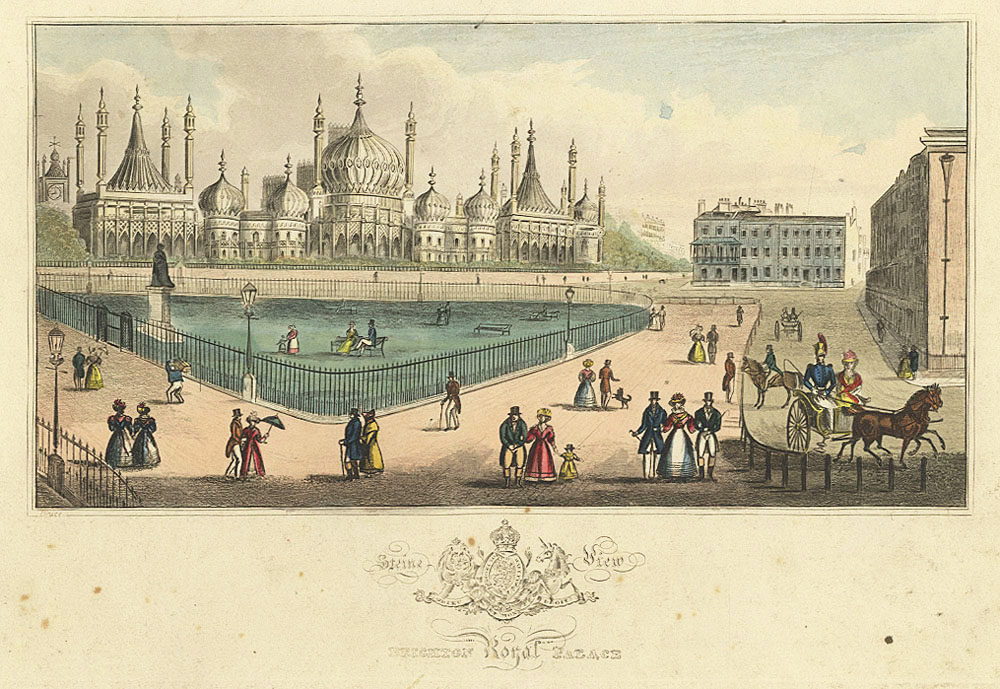
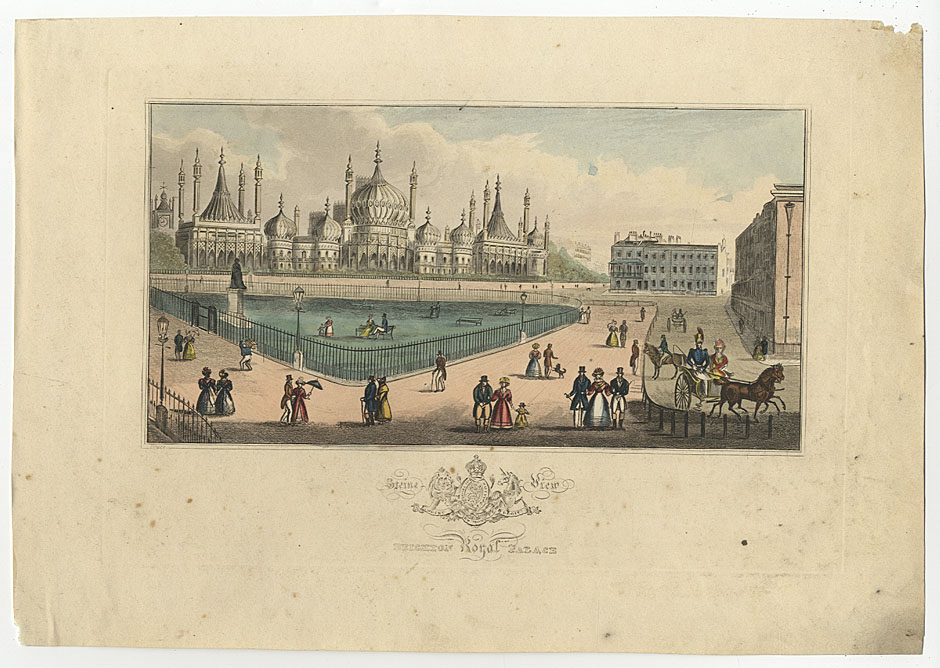
Sussex : Brighton Royal Palace. - Altkol. Aquatinta-Radierung von John Bruce, 1828-1833
Sussex : „Brighton Royal Palace“
Altkolorierte Aquatinta-Radierung,
by John Bruce, 1828-1833.
Aus : „Secret views of Brighton
Image size : 12,5 × 24 cm
Sheet : 23 × 33,5 cm
Das Blatt leicht angestaubt, die breiten unbedruckten Blattränder etwas stock- bzw. fingerfleckig, wenige Stockfleckchen auch innerhalb der Darstellung. Obere rechte sowie untere linke Ecke mit kleinen Abrissen (siehe Abb.) Verso Spuren vormaliger Montage in allen vier Ecken.
35 EUR
Thomas Rowlandson (1756 - London - 1827) : "Misfortune at Tulip Hall". - Altkolorierte Aquatinta, R. Ackermann, 1821
Thomas Rowlandson (1756 – London – 1827)
„Misfortune at Tulip Hall“
Altkoloriertee Aquatinta, 1821.
Aus : William Combe’s „The Tour of Doctor Syntax“.
Published by R. Ackermann, 1821.
Darstellung : 12 × 20 cm
Blatt : 15 × 24 cm
Das Blatt gleichmäßig nachgedunkelt, mit Bleistiftnotizen in beiden rechten Ecken, die unbedruckten Ränder gering fingerfleckig.
Die Darstellung selbst in schöner Erhaltung.
Satire, Karikatur
45 EUR
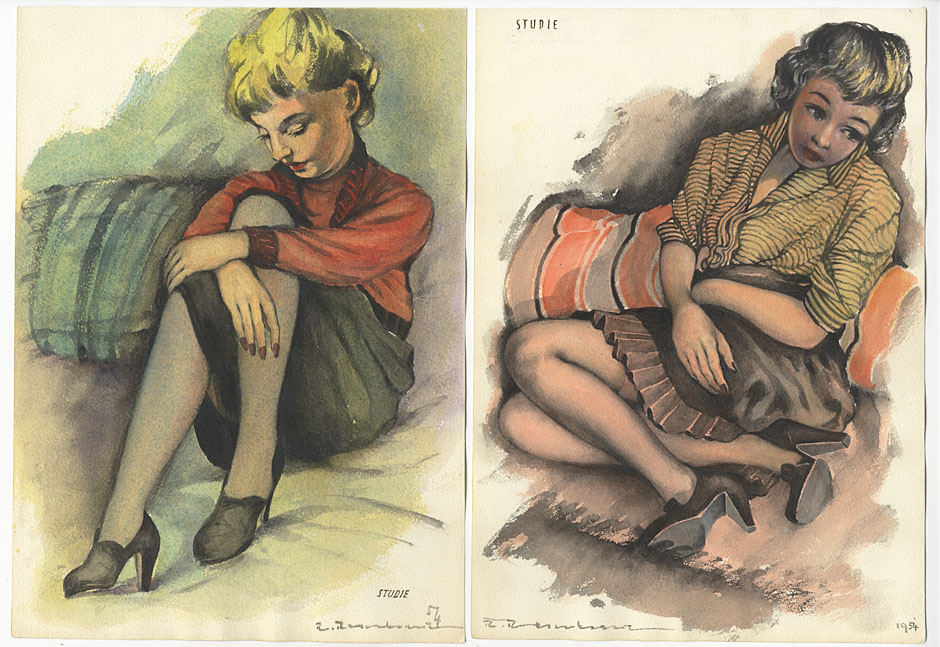
Rupert Rosenkranz (1908 Aichdorf/Österreich-1991 Hamburg) : Sitzende Frauen. - 2 Aquarelle, 1954
Rupert Rosenkranz (1908 Aichdorf/Österreich-1991 Hamburg) :
Junge Frauen (sitzend)
2 Aquarelle (Studien),
signiert und datiert, 1954.
Darstellung/Blatt : jeweils 29 × 20,5 cm
Aus dem Nachlaß.
Beide Blätter gering angestaubt sowie entlang der Ränder etwas lichtschattig.
Die Aquarelle ansonsten in guter, farbfrischer Erhaltung.
Vita : Rupert Rosenkranz wird 1908 in Aichdorf/Österreich geboren. Absolviert eine Lehre als Schriftenmaler und Vergolder, 1931-1933 an der Landeskunstschule Graz, arbeitet anschl. als techn. Zeichner, heiratet 1939 Fridgard Rosenkranz (geb. Henkel), von 1939 bis 1941 an der Hochschule für bildende Künste Berlin. 1950 Entlassung aus russ. Kriegsgefangenschaft, danach freiberuflicher Maler und Graphiker.
45 EUR
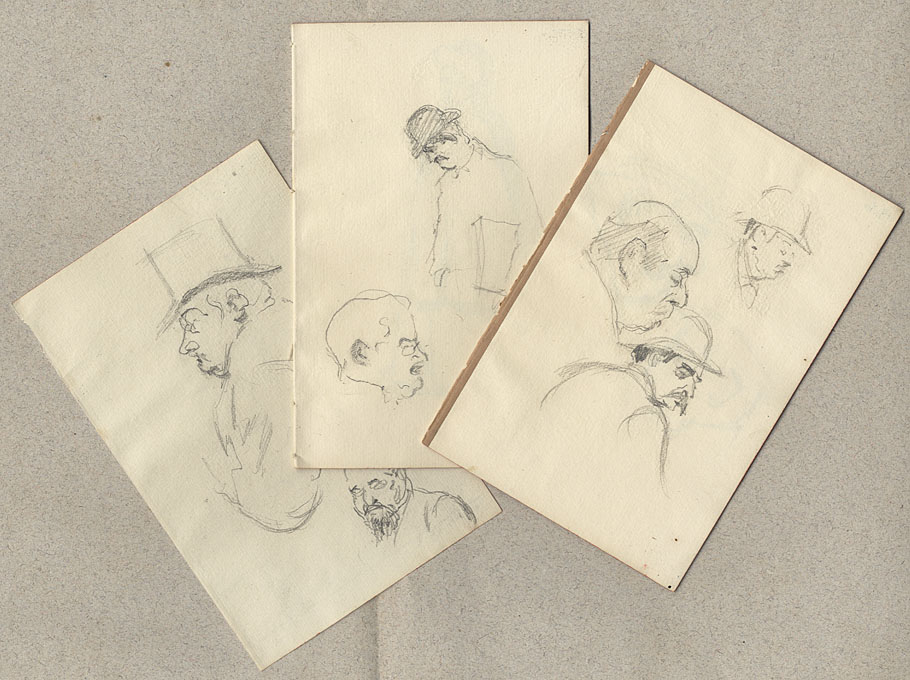
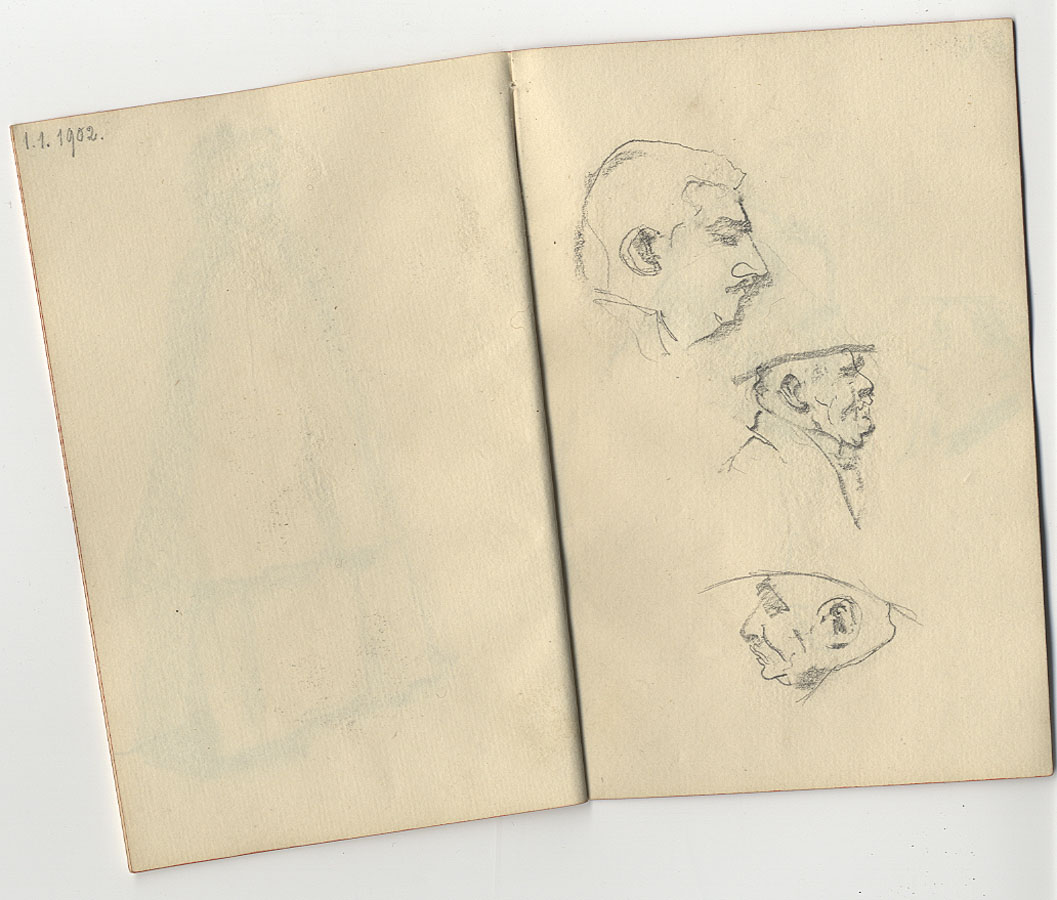
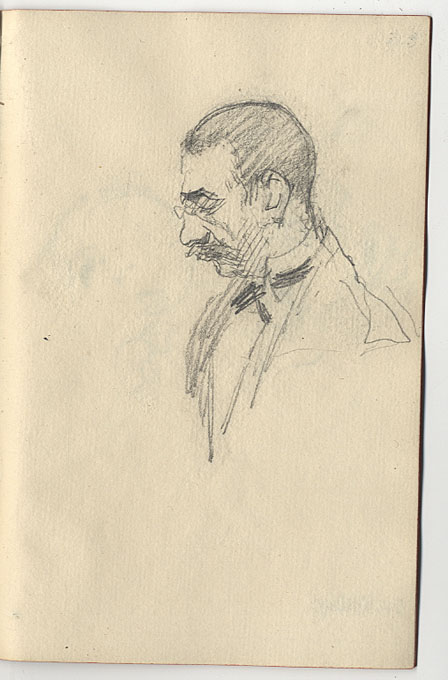
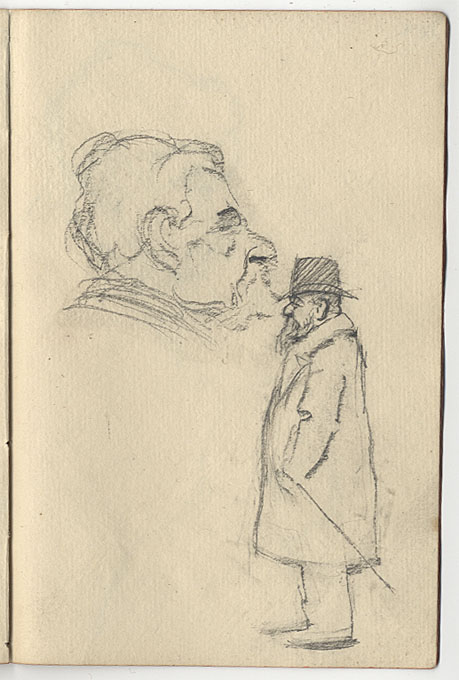
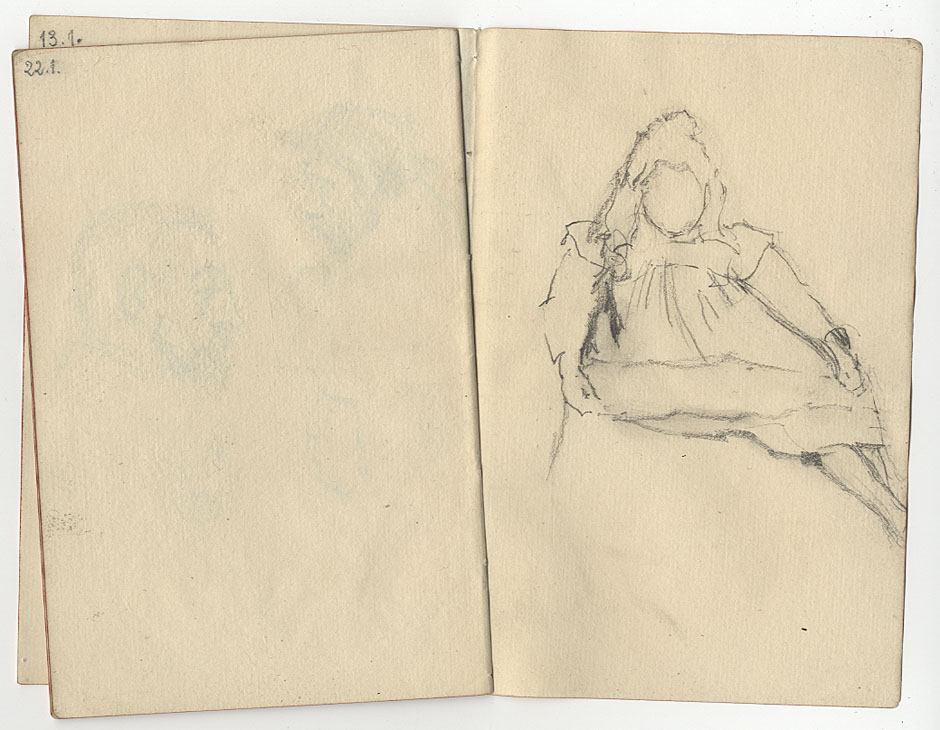
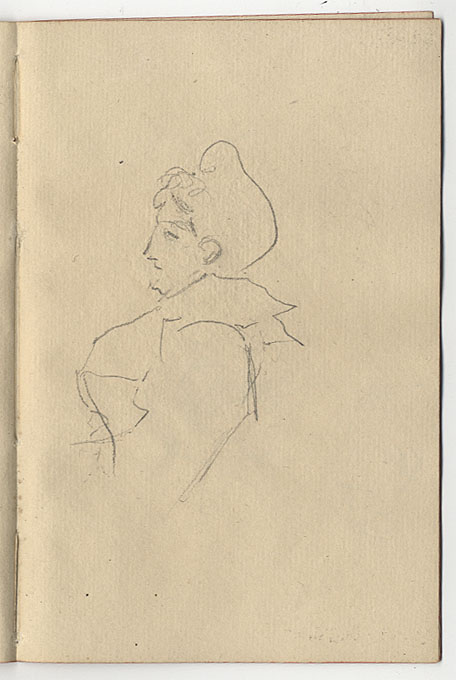
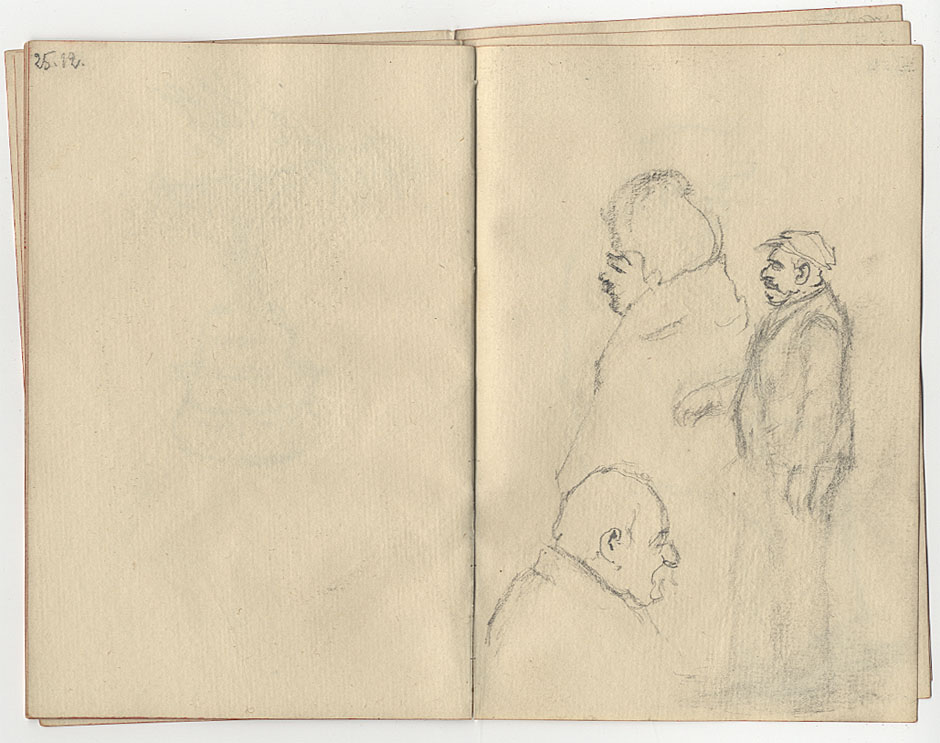
[Anonymus] : Porträt-Studien (Männer) - 21 Skizzen, Bleistift, 1902
[Anonymus] : Skizzenblätter / Porträt-Studien (hauptsächlich Männer)
21 Blätter (= 21 Zeichnungen),
Bleistift.
Ein Blatt vollständig datiert : „1.1.1902“.
Blattgröße : je 18,8 × 12,5 cm
Die kleinen Blätter (ursprünglich aus einem Skizzenbüchlein) jeweils noch in Lagen zu 10 Bl. gebunden, 1 Bl. lose. Die Studien z.T. gering alt- bzw. fingerfleckig (siehe Abb.) – ansonsten in guter Erhaltung.
Charakterköpfe
45 EUR
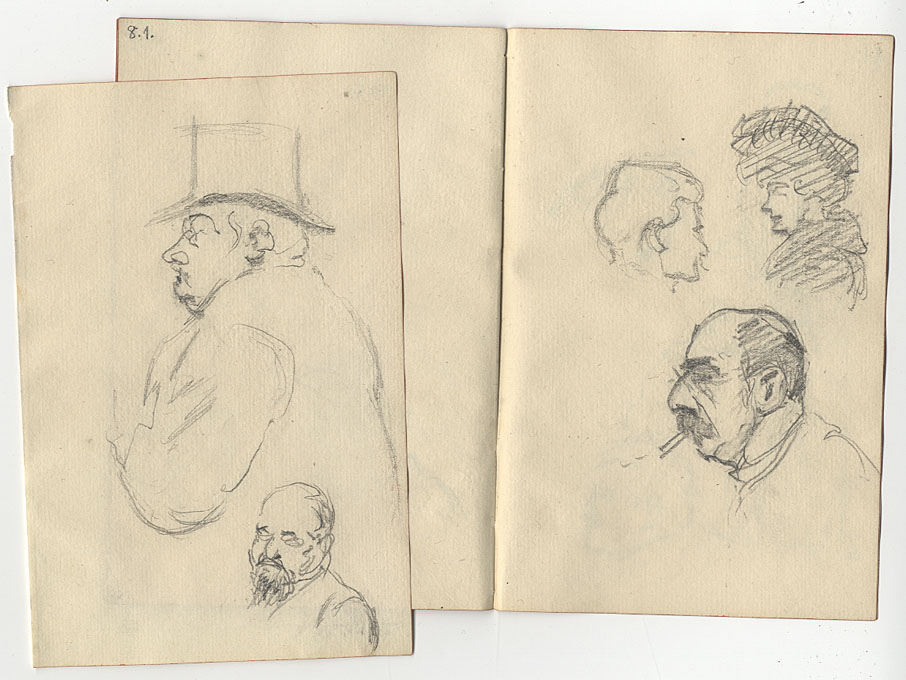
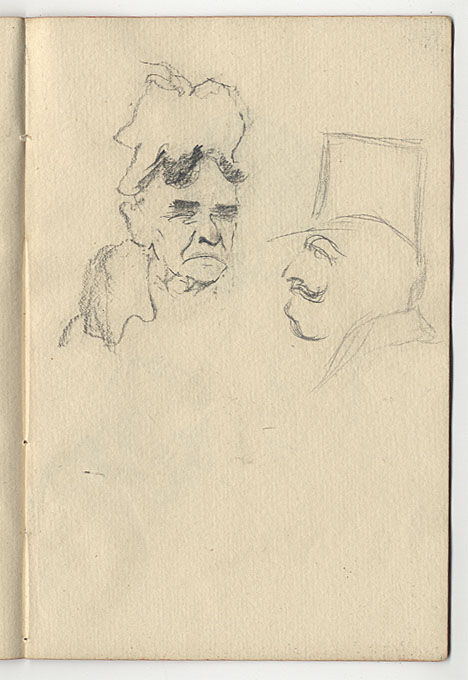
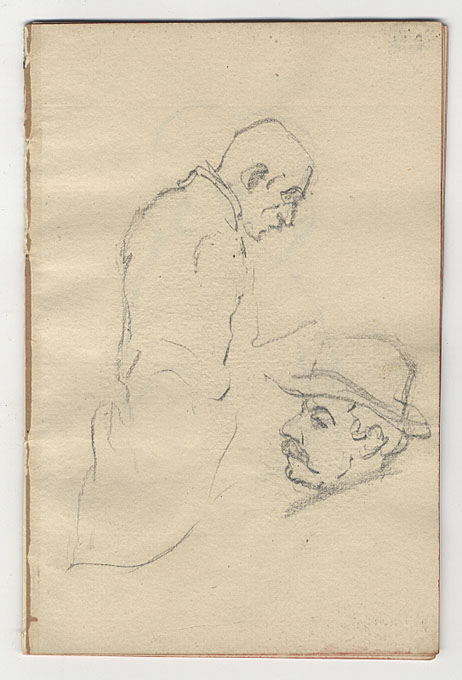
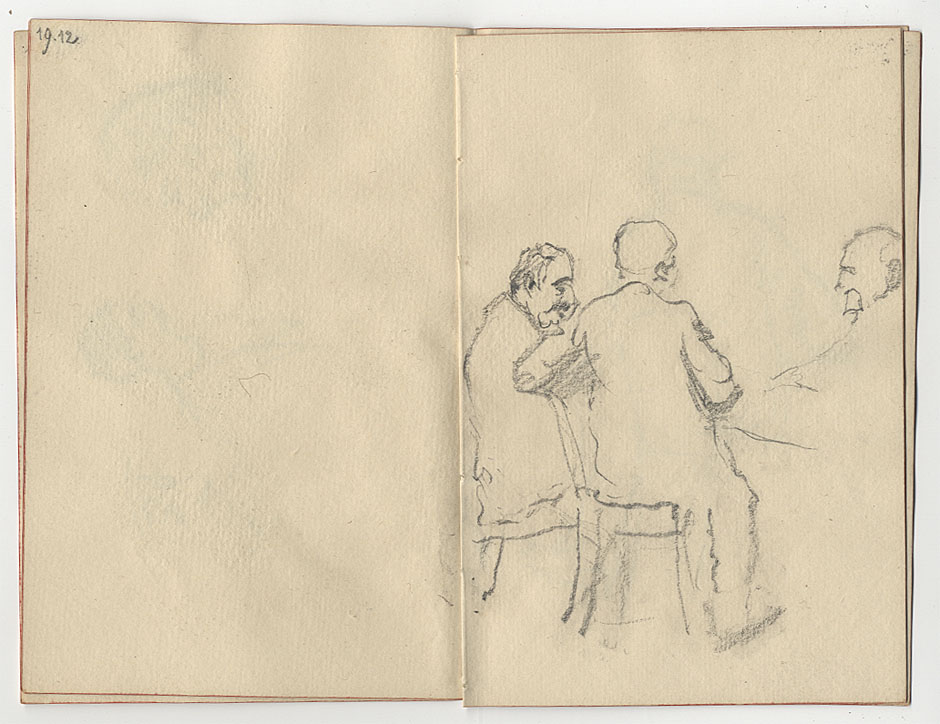
[Anonymus] : 13 Skizzen / Studien / Männer-Porträts. - Bleistift, um 1900
[Anonymus] : Skizzenblätter / Porträt-Studien
13 Blätter (= 13 Zeichnungen),
Bleistift, um 1900.
Blattgröße : je 18,8 × 12,5 cm
Die kleinen Blätter (ursprünglich aus einem Skizzenbüchlein) am linken Rand großteils noch zusammenhängend. Die Studien z.T. gering alt- bzw. fingerfleckig (siehe Abb.) – ansonsten in guter Erhaltung.
Charakterköpfe
45 EUR
Thomas Rowlandson (1756 - London - 1827) : "The Artist's Room". - Aquatint, original handcoloured. - Published by R. Ackermann, 1821
Thomas Rowlandson (1756 – London – 1827)
„The Artist’s Room“
Aquatint, original hand-coloured.
Published by R. Ackermann, 1821.
Image Size : 12 × 21 cm
Sheet : 15 × 24 cm
The print originates from : William Combe’s „The Tour[s] of Doctor Syntax“.
Condition : Somewhat age toned, otherwise in good condition.
„William Combe’s The Tour of Doctor Syntax in search of the picturesque was begun in 1809 and published in book form in 1812. Together with the accompanying aquatints by Thomas Rowlandson that inspired the poem, it satirises the aesthetic ideals lying behind the picturesque and its frequently pompous followers. The poem tells how Dr Syntax, a curate, sets off in search of the ideal picturesque landscape only to be continually thwarted by bathetic and farcical inconveniences. During the course of the poem the unfortunate Dr Syntax stumbles into a lake while attempting to reach the perfect location from which to sketch a suitably ruined castle, is chased by a bull and driven to distraction by the incessant bleating of sheep.
The aesthetic concept of the picturesque had evolved in late 18th-century Britain. It favoured the rough, varied and irregular forms of nature over the more rationalist Enlightenment ideas of aestheticism, taking much of its inspiration from the work of 17th-century landscape painters such as Salvator Rosa and Claude Lorrain. Its popularity, however, owed a great deal to a series of essays by the artist William Gilpin who transplanted the ideal of the picturesque from the Romantic paintings of European artists and applied it to the landscapes of Britain. Ironically, while the picturesque emulated organic and natural forms it prescribed a landscape adapted and altered by human intervention. In a much-quoted passage Gilpin commented, without humour, that ‘a mallet judiciously used’ would considerably improve the picturesque qualities of the insufficiently ruined gable of Tintern Abbey. This pursuit of the picturesque, even at the expense of common sense, made it a ripe target for satirists.“ (British Library)
45 EUR
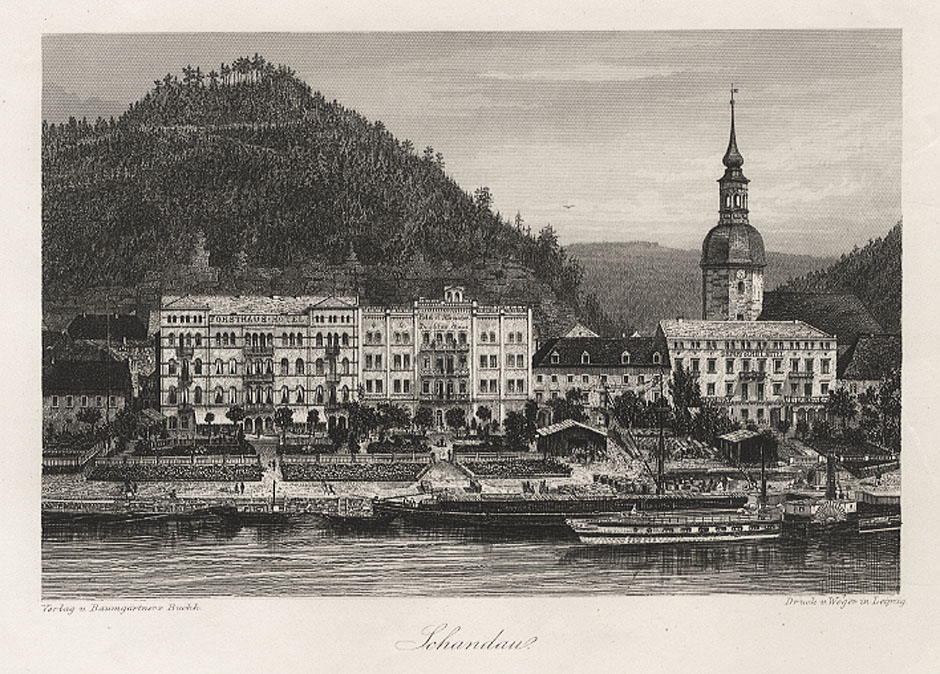
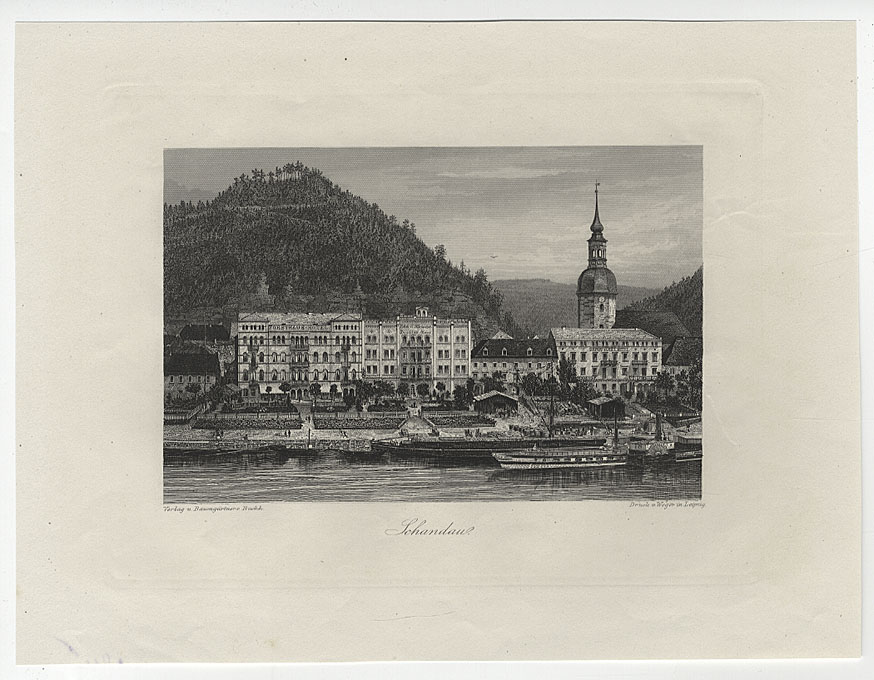
Bad Schandau (Sächsische Schweiz). - Stahlstich, um 1865
Bad Schandau (Sächsische Schweiz).
Stahlstich,
Leipzig, Weger, um 1865.
Verlag v. Baumgärtner’s Buchh.
Darstellung : 10,8 × 16,5 cm.
Blattmaß : 19,5 × 25,5 cm.
Klarer, kräftiger Abzug.
Die breiten unbedruckten Blattränder mit einigen Knittern bzw. Druckspuren rechts außerhalb der Darstellung (zum Teil auch in den Himmelsbereich reichend, siehe Abb.).
Rückseitige Spuren blauen Farbstifts am unteren linken Blattrand auch vorderseits merklich.
Ebenfalls rückseitig zwei schmale Streifen vormaliger Montage (Filmoplast P) zuäußerst am oberen Blattrand.
Kneippkurort, Sachsen, Elbe, Osterzgebirge, Elbtal, Elbsandsteingebirge
20 EUR
 Weiter