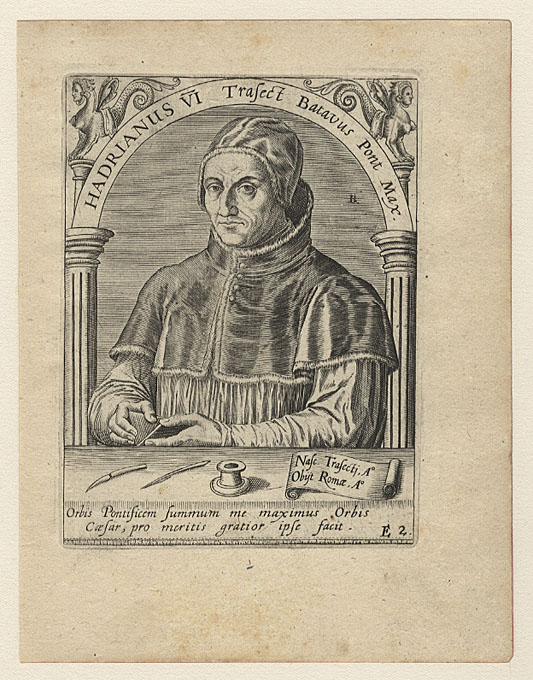
Portrait : Papst Hadrian VI. (1459-1523) / "Adrian von Utrecht". - Kupferstich von Johann Theodor de Bry, Frankfurt, 1650
Porträt : Papst Hadrian VI. (1459-1523).
Kupferstich von Johann Theodor de Bry,
aus „Bibliotheca Chalcographica“, Frankfurt, 1650.
Darstellung (Plattenrand) : 14 × 10,8 cm.
Blatt : 19 × 14,5 cm.
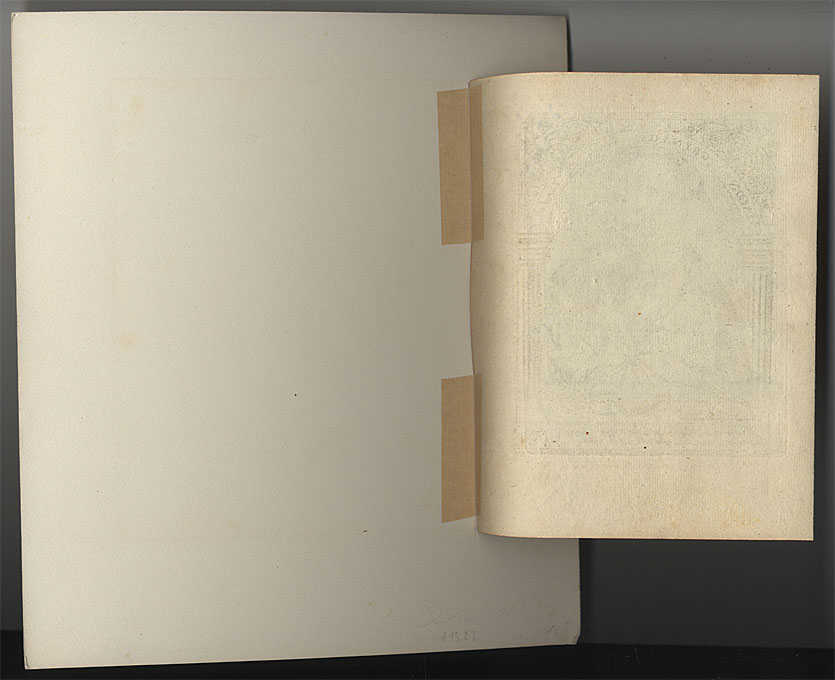
Das Blatt zuäußerst in den unbedruckten Rändern teils gebräunt bzw. stockfleckig, an der rechten Seite mit zwei Papierstreifen auf ein größeres Unterlageblatt montiert (siehe Abb.).
Die Darstellung selbst in schöner Erhaltung.
Papst Hadrian VI. (geboren Adriaan Florensz Boeyens, 1459 Utrecht – 1523 Rom)
55 EUR
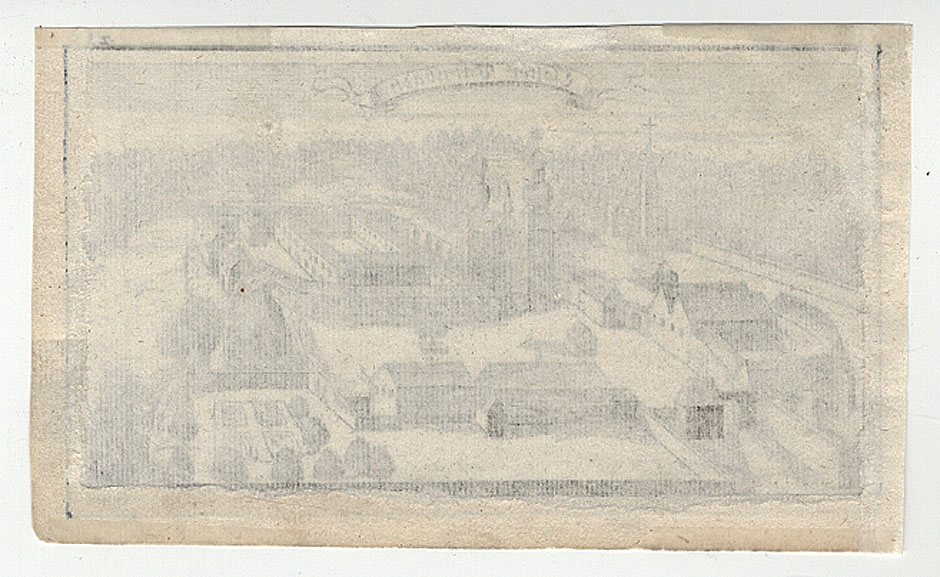
Kloster Vornbach : Closter Varnbach. - Kupferstich aus A.W. Ertl, "Chur-Bayrischer Atlas", 1705
Kloster Vornbach : „Closter Varnbach“.
Kupferstich von J.U. Kraus bei A.W. Ertl, „Chur-Bayrischer Atlas“,
Nürnberg, 1705.
Darstellung : 8,3 × 14,5 cm.
Blatt : 9,2 × 15,5 cm.
Das Blatt wegen der Knapprandigkeit an drei Seiten fachmännisch angerändert, die äußere Umrandungslinie teils fein nachgezogen. Rückseitig vier schmale Streifen vormaliger Montage (Filmoplast P) zuäußerst an oberer wie unterer Blattkante.
Benediktinerkloster, Neuhaus am Inn, Diözese Passau. – Orte der Umgebung: Neuburg am Inn, Wernstein am Inn, Schärding (Österreich), Sankt Florian am Inn (Österreich), Brunnenthal (Österreich), Suben (Österreich)
25 EUR
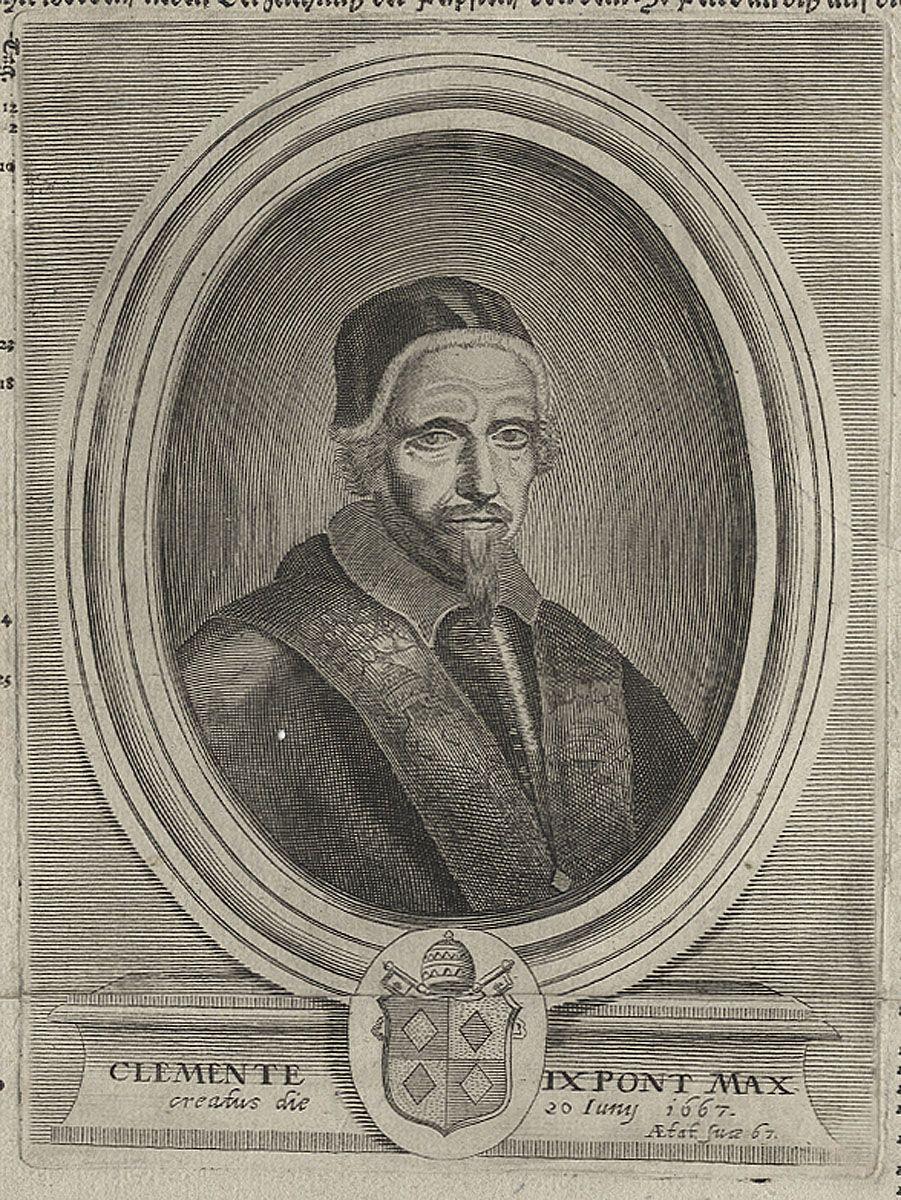
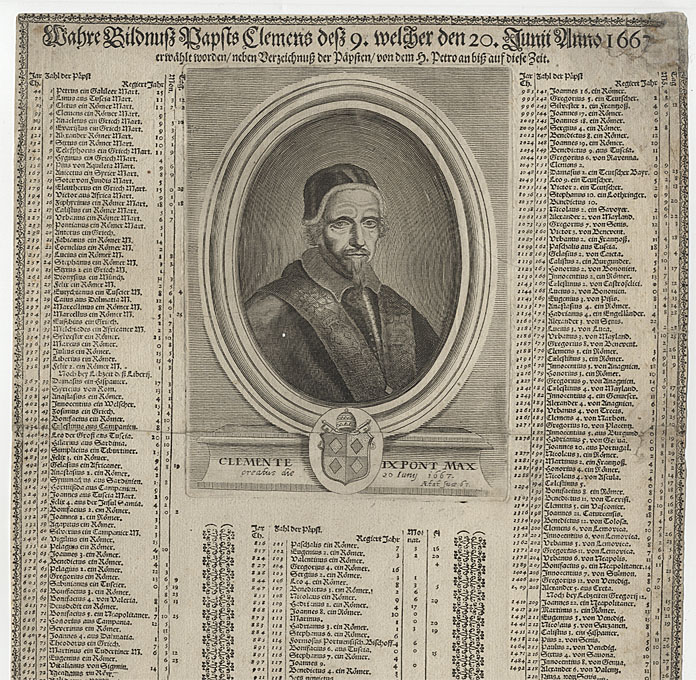
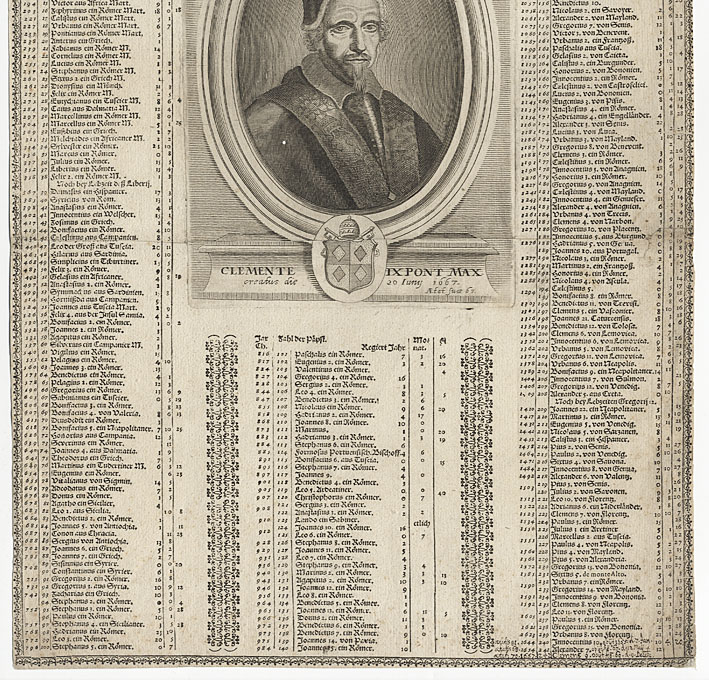
Papst Clemens IX. (1600-1669). - Kupferstich-Portrait zur Papstwahl, c. 1667
Papst Clemens IX. (1600-1669).
Kupferstichportrait, zur Papstwahl (1667)
- nebst der Aufzählung aller Päpste bis 1667 (diese in Typendruck)
Darstellung (Portrait) : 19 × 14 cm
Blatt : 37 × 29,5 cm
Erhaltungseinschränkungen :
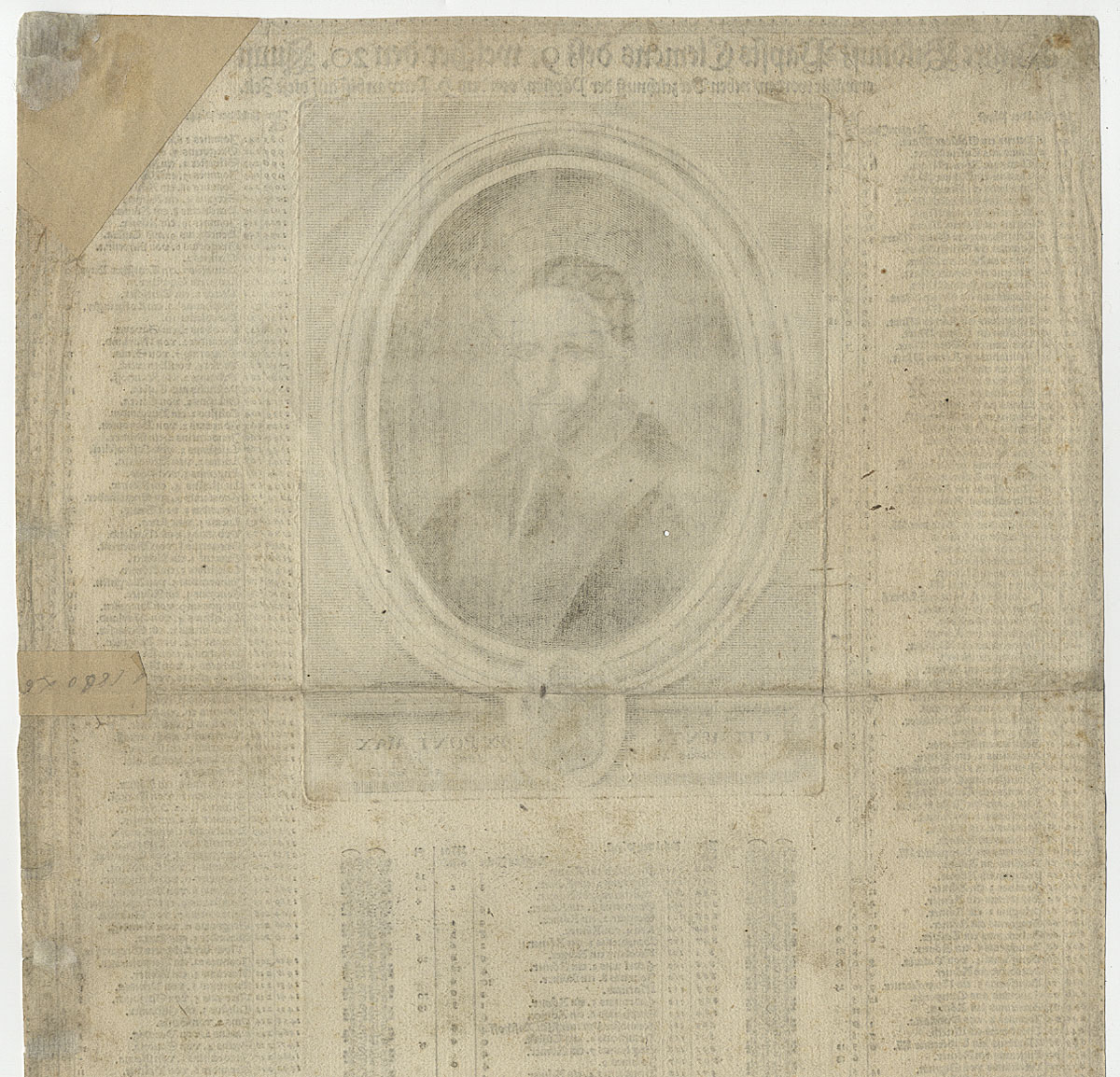
Das Blatt an oberer rechter Ecke großflächig hinterlegt, einige weitere Hinterlegungen (Einrisse) entlang der Blattkanten (siehe Abb.).
Stecknadelkopfkleines Löchlein (links unter der Schulter) sowie Spuren eines längeren Bleistiftfahrers im rechten Darstellungs- und Umrandungsbereich.
Kurzer feiner Papierbruch am linken Plattenrand, horizontale Papierfalte mittig horizontal durch das Blatt verlaufend.
Clemens IX. (1600 Pistoia – 1669 Rom), bürgerlicher Name Giulio Rospigliosi.
Ein Exemplar des Kupferstichportraits findet sich im British Museum (siehe Museum number: Bb,12.5)
55 EUR
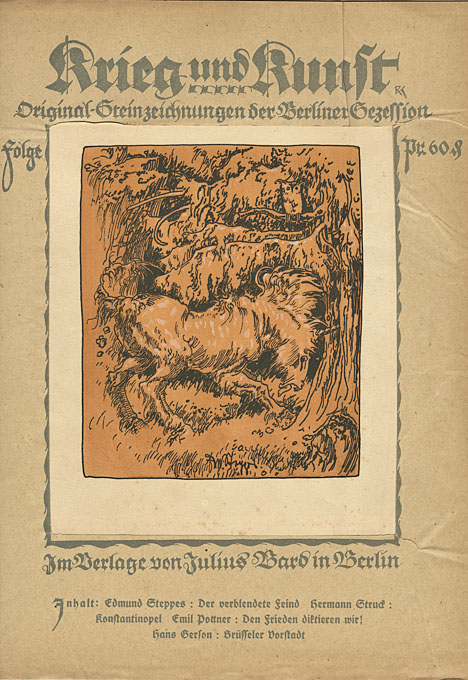
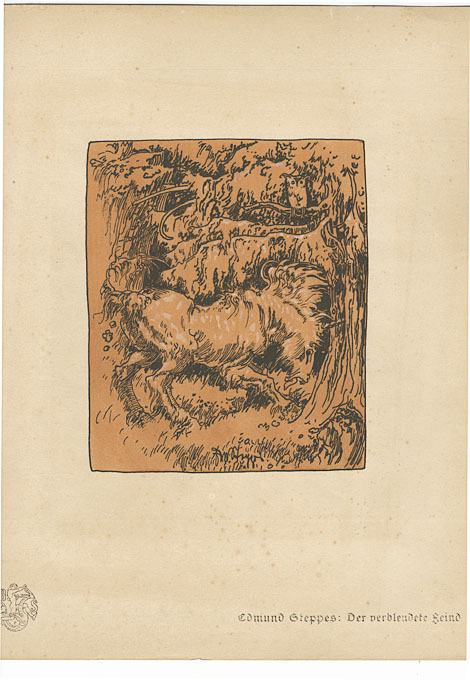
Edmund Steppes (1873-1968) : Der verblendete Feind (Einhorn). - Lithographie aus "Krieg und Kunst", um 1915
Edmund Steppes (1873-1968) : Der verblendete Feind (Einhorn)
Lithographie aus Krieg und Kunst (24. Folge),
im Stein bezeichnet und in der Original-Mappe.
Berlin, Julius Bard, ca. 1915/16.
Darstellung : 21 × 17,5 cm
Blattmaß : 42 × 33,5 cm
Die Orig.- Mappe aus dünnem Papier lichtschattig, knittrig sowie mit zwei Einrissen an den rechten Ecken des Passepartoutausschnittes.
Das Blatt gebräunt, lichtschattig sowie stockfleckig, feine Druckspur (ca. 1 cm) im linken unbedruckten Blattrand. Wenige kleine Läsuren an oberer wie unterer Blattkante, das Blatt insgesamt mit mehreren Fingerknicken.
Die Darstellung selbst in guter Erhaltung.
Zur Abbildung: Aufgrund seiner Größe kann das Blatt nur in Teilen abgebildet werden.
Edmund Carl Ferdinand Maria Steppes (1873 Burghausen – 1968 Deggendorf), deutscher Landschaftsmaler.
45 EUR
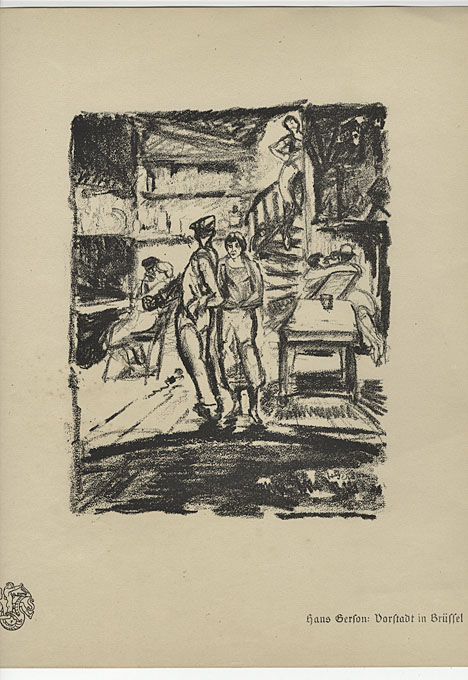
Hans Gerson (*1882) : Vorstadt in Brüssel. - Lithographie aus "Krieg und Kunst", um 1915
Hans Gerson (*1882) : Vorstadt in Brüssel.
Lithographie aus Krieg und Kunst (24. Folge),
im Stein bezeichnet.
Berlin, Julius Bard, um 1915.
Darstellung : 26 × 21 cm
Blattmaß : 42 × 33,5 cm
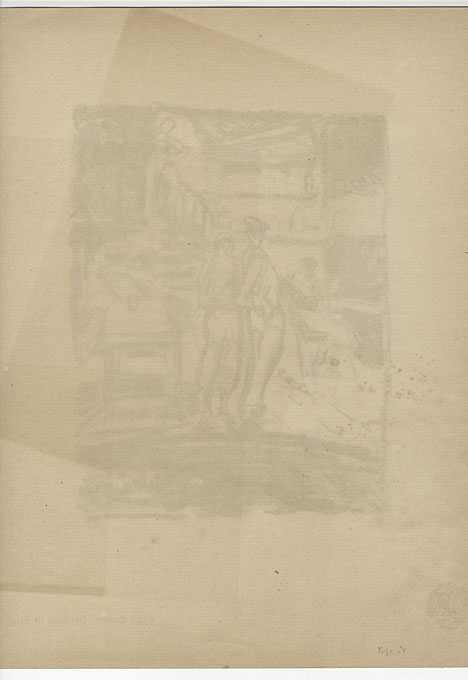
Das Blatt etwas nachgedunkelt, gering stockfleckig, mit einigen schwachen Fingerknicken – insgesamt in guter Erhaltung.
Zur Abbildung: Aufgrund seiner Größe kann das Blatt nur in Teilen abgebildet werden.
Berliner Secession
35 EUR
München - Franziskanerkloster: Kupferstich/Wening, 1701
München – Franziskanerkloster : „Das Franciscaner Closter in München.“
Kupferstich von Michael Wening, 1701.
1. Auflage.
Darstellung : 25,5 × 35 cm.
Blatt : 28,5 × 39 cm (Papier mit Wasserzeichen).
Deutliche Erhaltungseinschränkung:
Das Blatt an der linken Kante angerändert und die Linien unprofessionel mit Filzstift nachgezogen.
Abriss an der unteren rechten Ecke (weit außerhalb der Darstellung).
Die Darstellung selbst in guter Erhaltung.
35 EUR
Liebespaar / Liebende am Spinnrad - Lithographie (Stammbuchblatt), um 1850
Liebespaar am Spinnrad
Altkol. Kreide-Lithographie von Vogel,
Stammbuchblatt, um 1850.
Darstellung/Blattgröße : 9 × 13,8 cm
Gebräunt sowie etwas stockfleckig, Spuren vormaliger Einbindung entlang des rechten Blattrandes. Feiner Knitter rechts vom Paar, kleiner Einriss rechts an der Unterkante (siehe Abb.).
Stammbuchkupfer
35 EUR
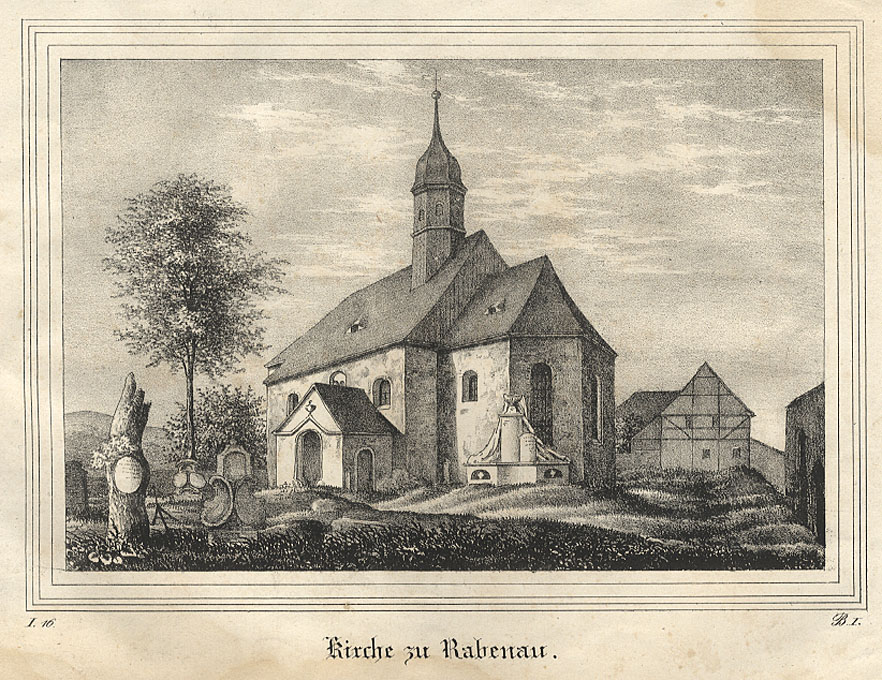
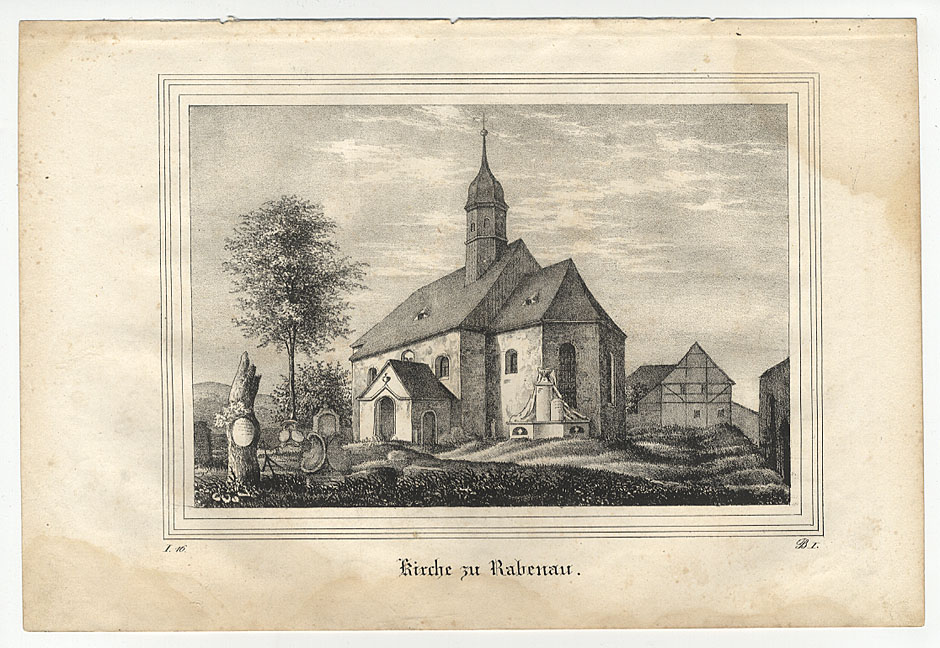
Rabenau (Sächsische Schweiz-Osterzgebirge) : Kirche St. Egidien. - Kreide-Lithographie aus : Sachsens Kirchen-Galerie, um 1835
Kirche zu Rabenau.
Lithographie,
aus : Sachsens Kirchen-Galerie. Inspectionen Dresden, Meissen und St. Afra.
Dresden, Hermann Schmidt, um 1835.
Darstellung : 12 × 18 cm.
Blatt : 18,5 × 27 cm.
Die unbedruckten Ränder stockfleckig und wasserrandig, an der oberen rechten Ecke auch bis in die Darstellung reichend (siehe Abb.). Spuren vormaliger Einbindung entlang des unteren Blattrandes.
Kirchspiel Kreischa-Seifersdorf. – Orte in der Nähe: Dippoldiswalde und Freital
28 EUR
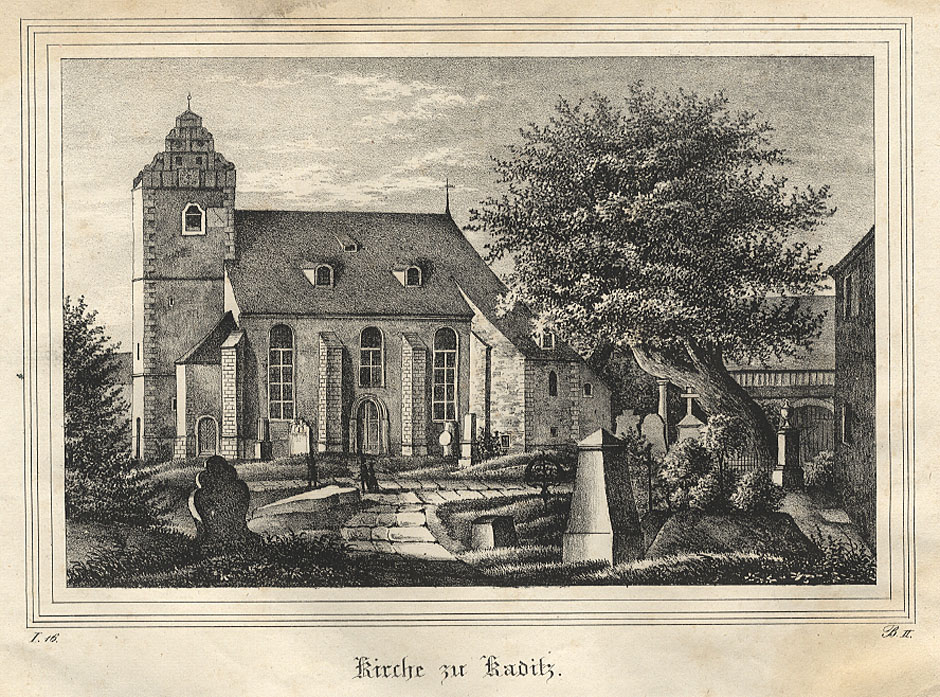
Dresden-Kaditz : Emmauskirche. - (Kreide-)Lithographie aus : Sachsens Kirchen-Galerie, um 1835
Kirche zu Kaditz (Dresden).
Lithographie,
aus : Sachsens Kirchen-Galerie. Inspectionen Dresden, Meissen und St. Afra.
Dresden, Hermann Schmidt, um 1835.
Darstellung : 12,5 × 19,5 cm.
Blatt : 18,5 × 27 cm.
Die unbedruckten Ränder stockfleckig, wasserrandig und an der Oberkante etwas altfleckig (teils auch in die Darstellungsumrandung reichend, siehe Abb.). Spuren vormaliger Einbindung entlang des unteren Blattrandes.
Die Darstellung ansonsten in guter Erhaltung.
Evangelische Kirche, Altkaditz, früher Laurentiuskirche, Kaditzer Linde
35 EUR
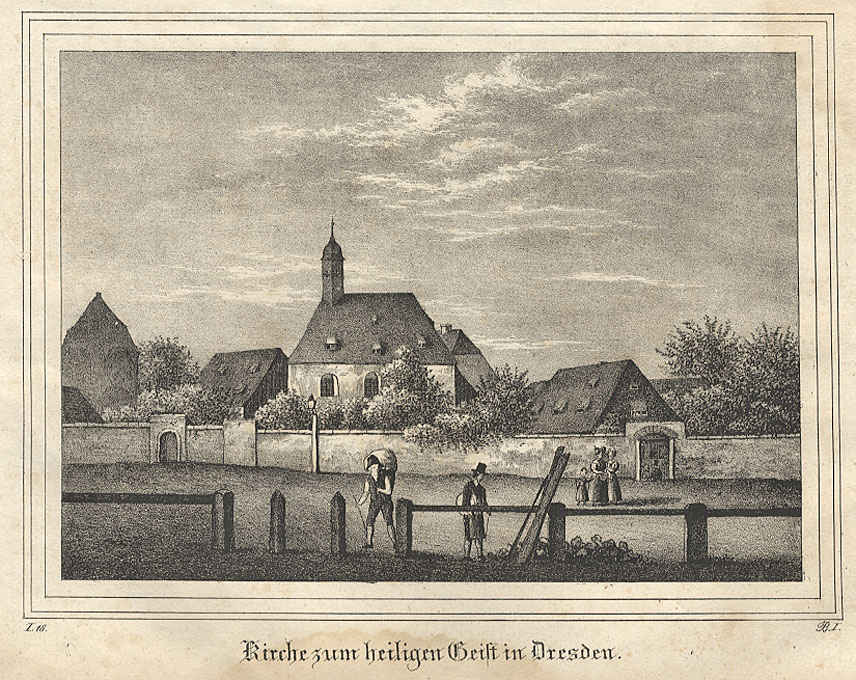
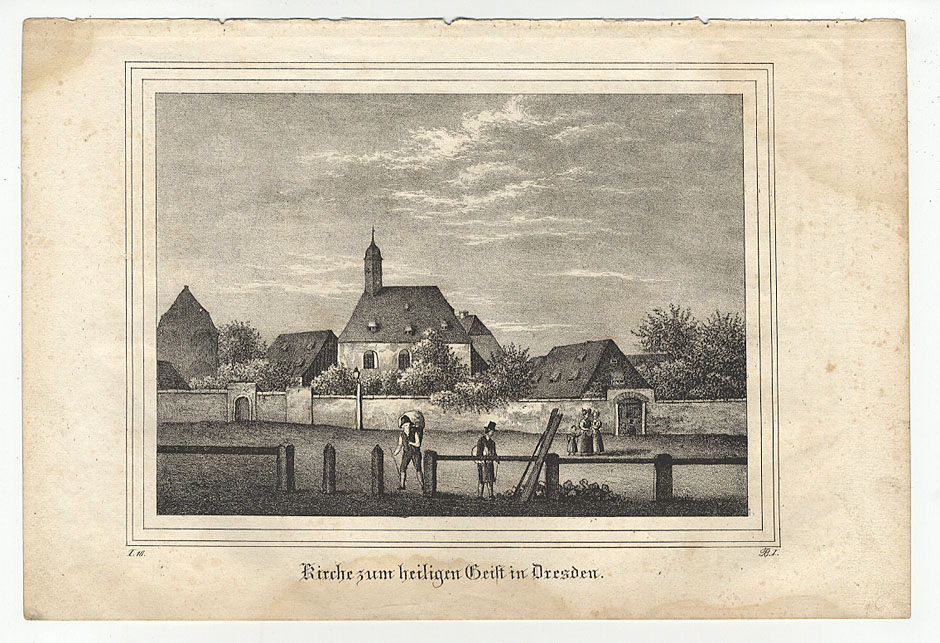
Dresden : Kirche zum Heiligen Geist / Bartholomäus-Kirche. - (Kreide-)Lithographie aus : Sachsens Kirchen-Galerie, um 1835
Dresden : Bartholomäus-Kirche (1839 abgerissen)
„Kirche zum heiligen Geist in Dresden.“
Lithographie,
aus : Sachsens Kirchen-Galerie. Inspectionen Dresden, Meissen und St. Afra.
Dresden, Hermann Schmidt, um 1835.
Darstellung : 13 × 18 cm.
Blatt : 18,5 × 27 cm.
Die unbedruckten Ränder stockfleckig und wasserrandig (oben rechts auch etwas in die Darstellung reichend). Leichte Knickspur in unterer linker Ecke sowie Spuren vormaliger Einbindung entlang des oberen Blattrandes.
Wenige schwache Bräunungen auch innerhalb der Darstellung (siehe Abb.).
St.-Bartholomäus-Kirche, Bartholomäus-Hospital, Wilsdruffer Vorstadt
35 EUR
 Weiter